“We cannot arrest our way out of Crime & Social Exclusion”

Note: This piece was written before this week's shooting of a 17-year-old here in the South West Inner City. However, in light of this event its content is more relevant than ever. We believe that every young person has the right to grow up in a world where they can be safe and live free from the dangers of the criminal world and are committed to being active at community and policy level so this can become a reality.

rua 10[1].jpg

This week the Department of Justice launched its Justice Strategy Statement and the Justice Plan 2021. The launch occurred against the backdrop of a recent spate of serious crime involving young people around Dublin City. In one case, this resulted in the death of a young person and in another, the death of a woman walking home from work. Speaking at the launch, Minister James Browne stated:

“We cannot arrest our way out of crime, we cannot arrest our way out of social exclusion, and we cannot arrest our way out of poverty. We need to develop social capital by supporting families and communities and by empowering youth workers.”

Solas Project fully supports this statement.  We also recognise the seriousness of these issues and condemn attacks on all people. We want to be part of building a city where everyone – young, old, all races, genders and creed – can live safely and free from intimidation and indeed violence.

We believe that it is not enough to express horror and condemn such violence, but that action is required. We are concerned about some commentary and calls for action against young people living in our city. These calls range from demanding harsher sentences “lock them up and throw away the key”, to the complete dehumanising of these young people and disregard for their age, circumstances or their potential to change.

While harsher sentences might seem a like a good quick fix they do little to stop crime happening in the first place. We are calling for a focus on prevention rather than punishment. Research suggests that harsher sentences do little to deter a young person from acting in a certain way. A young person who picks up a knife is not in that moment considering the difference between a 2-year or a 5-year prison sentence. They are caught up on the issue at hand: What do they need the money for? Why are they feeling threatened? How can they defend themselves?

So what is the solution?

In 2005, in response to serious youth-based knife crime, the Scottish Government launched the Violence Reduction Unit (VRU) and started treating knife crime with a public health approach. This government funded unit operates by forming strong, close relationships between the police and key workers in the health, education and social sectors to support vulnerable young people in often neglected communities. The objective of the VRU is to offer these individuals alternative opportunities, and crucially, a way out of the spiral of violence that they often find themselves in.

This community-led approach sees the police engage directly with the young people most at risk of engaging in violence. Young people are spoken to in plain terms and develop positive relationships with mentors in key sectors. The success of this public health approach can be seen in the statistics, most notably that since the establishment of the VRU, the number of homicides in Glasgow has dropped by 65%.

Solas Project currently operates the Rua programme which works intensely with young people caught up in the criminal justice system to support them in building a new crime-free, positive life. At the halfway point of this 4-year intervention, over 50% of the young people had halted the downward trajectory of their life. Investment into a programme such at the VRU in Scotland or Rua here in Dublin would not only reduce serious crime and makes society safer, it would allow these young people to grow and flourish. 

It is also important to look at what is causing this rise in youth-based crime. What has allowed for the creation of this sub-culture?

We know that crime rises during periods of growing inequality and austerity. The young people involved in this behaviour have grown up during a decade of austerity and are suffering the consequences of social neglect and poverty. The communities where these events are taking place are also those that suffer the highest level of social neglect, unemployment and low education attainment. This sadly is not a coincidence.

We also cannot ignore the growing negative influence of the drug industry on young people in these communities. Recent research carried out by Dr Johnny Connolly from The University of Limerick suggests that in one part of Dublin, children as young as 10 or 11 – many of whom are still in primary school – are groomed by the gangs to be runners and carriers and are considered to be both “expendable” and “plentiful”. We simply cannot talk about tackling youth crime without addressing the influence that these criminal gangs are having on our young people.  

Alongside these factors we are now approaching almost one year of living through a global pandemic. The supports and structures that young people have typically relied on; school, sports, youth services etc. have been eroded leaving idle and impressionable young people behind, making them more vulnerable to both criminal grooming and addiction.

Solas Project is calling for preventative action that is community based with the needs of young people at its core.

We value the important role that Gardai play in promoting safe communities. We are calling for a concentration on community policing with a dialogue and solution-focused policing strategy, rather than the introduction of increased stop and search methods than can add to already existing tension in the community.

We are calling for targeted youth programmes that engage long-term with high-risk young people.

We are calling for the full implementation of the new Youth Justice Strategy 2021 -2026 (due to be launched soon) with a concentration on early intervention and prevention rather than punishment.

We believe that every young person has the right to grow up in a world where they can be safe and live free from the dangers of the criminal world. This is not just something that should be the privilege of those who live in wealthier areas of the city, this is a right for all our children and young people.

A thank you to Ann

Ann for thank you pic.jpg

This week we had a big goodbye.


Ann has been an integral part of Solas Project since shortly after it’s conception in 2007. Alongside Salla Heron, founder of Solas After School Project, Ann volunteered with our first After Schools club for ten girls in Basin Lane (the same premises we use for Junior After Schools today).


Thank you card ann.jpg

Ann most recently worked full time with us overseeing the day to day management of three After Schools clubs, 35 children, 3 staff, approx. 30 volunteers, students and interns. She spent the majority of her time with children aged 8 – 11 in the Senior After Schools club however she is known by many more young people spanning all ages and their families in the community. Ann has spent years in this area as a member of Solas Project and other organisations building rapport and credibility which has ensued Solas Project’s growth and strong reputation. Trust from young people, parents and local schools is key to our progress and success.


In the most humble way, we want to acknowledge Ann’s behind the scenes consistency, dedication and unwavering belief in the young people of Dublin 8. With the motto ‘any excuse for a celebration’, Ann has embraced our value of Joy wholeheartedly which shows in her own contagious laughter recognisable from afar, and in the children’s daily enjoyment of attending the After Schools Clubs.

Ann will be moving on to a new vocation very much in line with these same passions and skills and we’re excited for her in this new venture.

Thank you Ann from all of us at Solas Project.


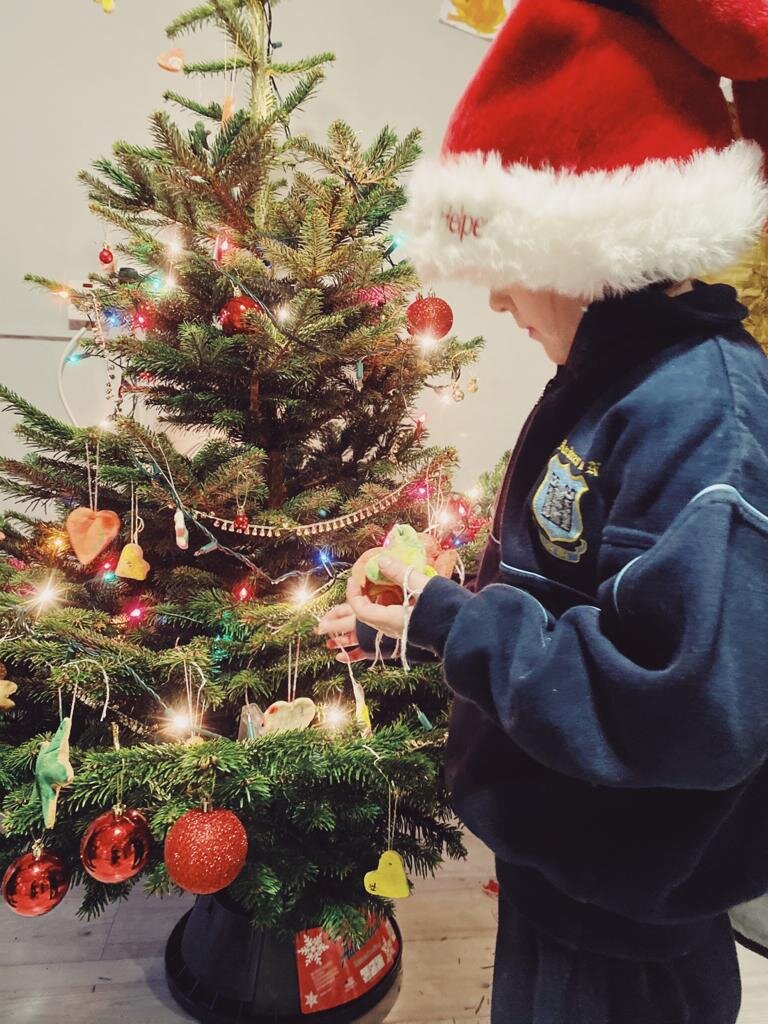
Our first real Christmas tree

How it started…

With our world looking a bit different this Christmas, we wanted to do something special in the Junior After School Club (JAS). We realised we would have to think outside of the box this year as a Christmas movie in the cinema is no longer an option…

CTREE6.jpeg

On hearing that the concept of a real Christmas tree was new for these 5 – 7 year olds, we had an idea! Was there such a thing as Christmas tree farm in Dublin? Could we let them pick out a real tree for the club? 

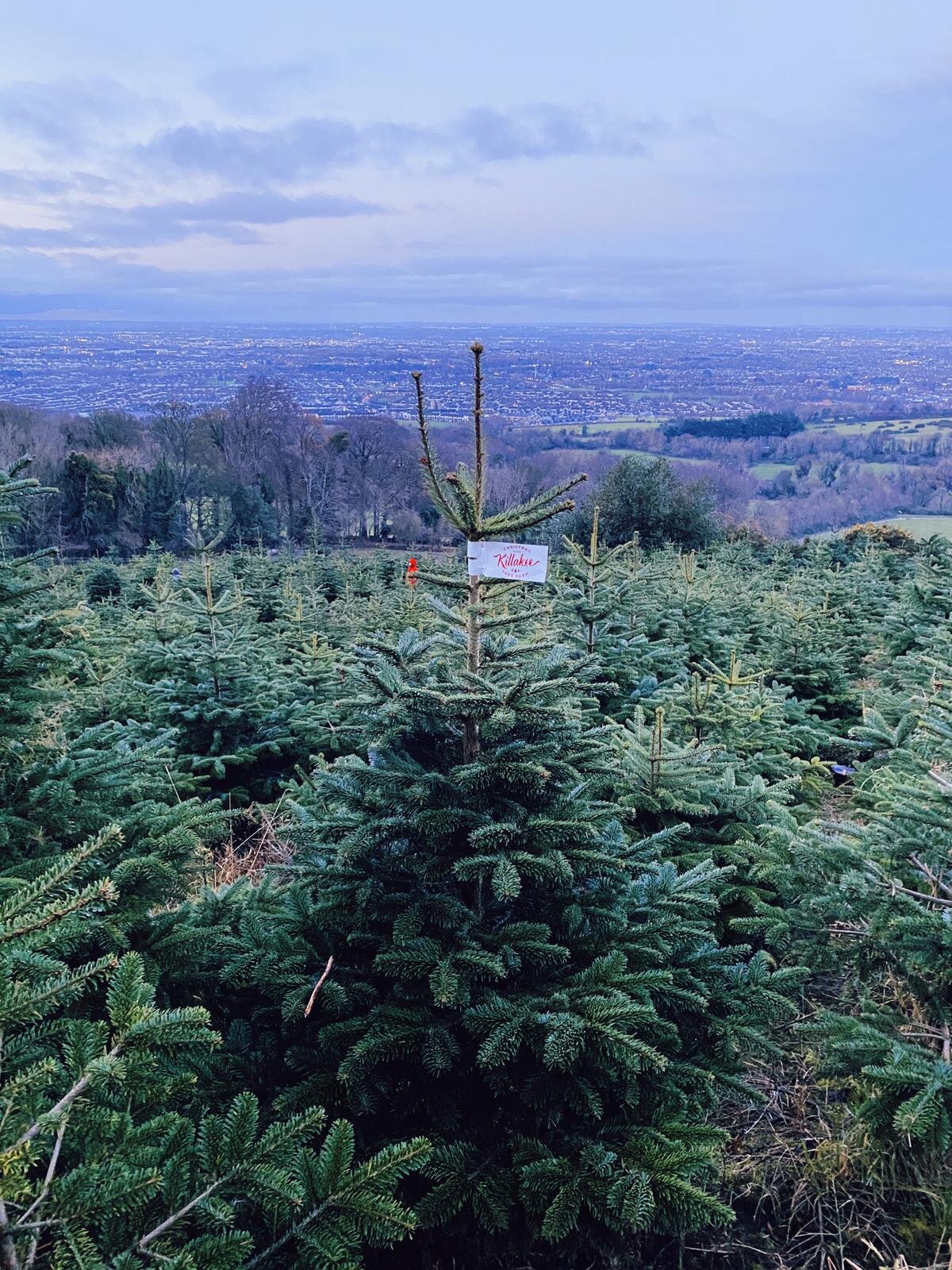
After a bit of researching, we found a place called Killakee Christmas Tree Farm in the Dublin Mountains. JAS club leader, Ruth, emailed the owners straight away to gauge their response to us visiting them with a group of ten lively children in tow. She explained that Solas Project is a charity and that this would be their first real Christmas tree. 

We couldn’t have asked for a nicer response! Co-owner of the tree farm, Karen, replied to say that Solas Project’s co-founder Graham Jones brought his family every year. She was looking forward to welcoming us and would donate the tree to our Junior After Schools group in Graham’s honour.

The adventure

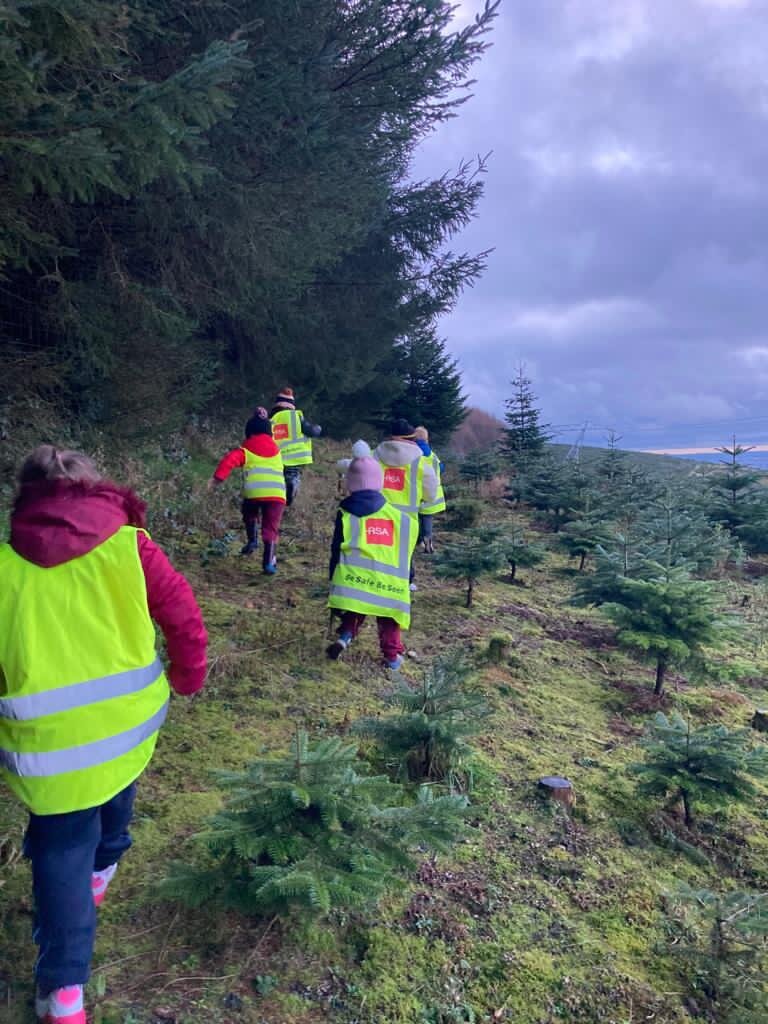
On Thursday 3rd December we set off in the Solas Project bus on a crisp cold afternoon to the mountains. When we arrived at the tree farm, we were given a ‘Solas’ tag and the freedom to roam around the hills and choose whichever tree we fancied. 

CTREE8.jpeg

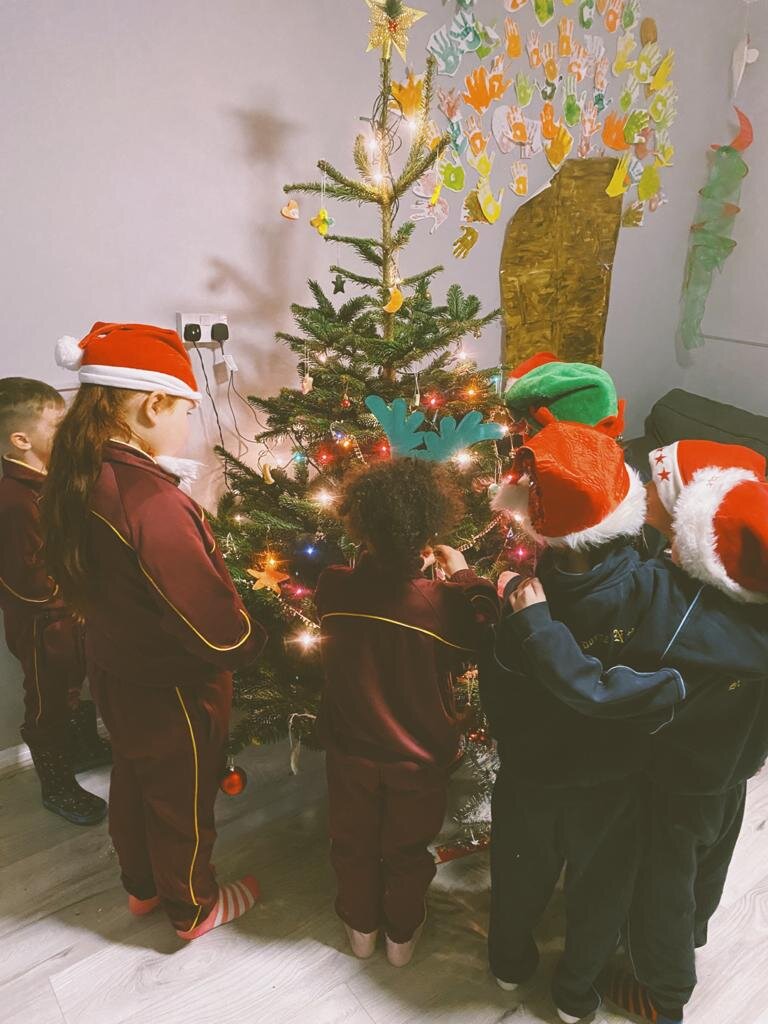
The kids were beyond excited. After looking around for a while admiring the views, the children agreed on and tagged a tree. The tree cutter on his quad bike was great with the kids. He kept getting ‘confused’ about which tree to chop down…”NO, not that one!”…  The kids shouted ‘timber’ in unison when their tree fell. Finally, it was time to get the tree ready to bring home along with some children who got wrapped up like Christmas trees too!

We will not forget our Christmas trip 2020 in a hurry. We suspect our tree picking outing may even become a Solas Project tradition… 

We’d like to thank all of the staff at Killakee Tree Farm who made it a magical experience. 

CTREE4.jpeg

International volunteering in a Covid reality

WhatsApp Image 2020-11-30 at 11.58.20(1).jpeg

Our three European Solidarity Corps (ESC) volunteers talk about their experience moving to Dublin during a global pandemic.Their dedication to the project is exemplified by their decision to stay in Ireland for Christmas, one third of their way through. This is a first. We want thank them for their invaluable contributions so far to the After Schools clubs and to wish them the merriest of Christmases in a new city with new friends.

Ines

Arriving in Dublin in the midst of the Covid-19 crisis added some anxiety to the natural excitement that precedes the beginning of a new adventure. It was the 25th of August when, surrounded by my luggage cracking at the seams, I waved at my Dad from inside the airport in Verona. Attempting to distract my mind on the flight, eventually as the plane descended I caught a glimpse of Ireland’s fluffy white clouds outside the window and in my heart I knew I would land on something soft. This feeling has been confirmed throughout my stay. The support of new friends, Solas Project staff and my brilliant supervisor has given me strength to get through initial adjustment difficulties and has motivated me to keep going.

SU for social media 2.JPG

In the mornings we prepare food for the after school clubs, a total of 35 kids. Being in the kitchen is always fun; the tunes of Dublin's radio set the pace for the lifting of heavy pots and the peeling of potato mountains. Then we are ready for the children!

For my ESC year with Solas Project I have been assigned to ”The Bridge”, located in the colourful heart of the Liberties in Dublin 8. Connecting with a lively group of pre-teens is an ongoing challenge; young people utter their playful and witty lines at the speed of light, adapting to a new kind of humour as well as finding tools to solve behavioural issues is hard but rewarding. I have shared many happy moments, creating slime from scratch and baking delicious rice krispies buns with marshmallows.

So far, I have learned so many new things: when something is really cool I can use the adjective “deadly” without any macabre implication, your runners have to be “massive” in order to be hip and there is no better way to end a hard day of work than with a warm cuppa and biscuits.

I was surprised by how friendly and welcoming the people I met were: even if the world has entered in a sort of “disconnection” mode, I have always felt connected and part of a community.

Ines selfie Deer.jpg

Experiencing Dublin during covid-19 was at the first glance, quite sad with pubs and places of gathering closed. However, the general stillness has also allowed me to get a unique gaze of the city and its secret corners otherwise hidden by crowd and noise.

The majestic deer of Phoenix Park, the curious herons on the Grand Canal, the scent of malted barley that blows behind the Guinness Factory, the burning sunset on Dublin's beautiful bridges. All of these are already dear souvenirs of mine that I will always carry with me.

Cecile

My name is Cecile, I am 19 years old and I am volunteering in Dublin for a year with „Solas Project“ helping look after a bunch of joyful children in the Junior After schools club (JAS). Three months in, there is already so much to tell!

My first impression of the city was how colorful it is with all of its unique doors, shops and street art, even on rainy grey days. Also, I am pleasantly surprised by how open, warm-hearted and caring Irish people are.

Ines beach.jpg

So far the highlight of my stay in Dublin is, that you can easily reach the coast from my accommodation to watch the sea, which I highly enjoy. The other highlights include walking along Grafton street with its shiny Christmas lights, a hot coffee in my hand or exploring Dublin‘s pretty parks.

Unfortunately, I haven’t had a chance yet, to visit museums, pubs or different cities because of lockdown level 5 restrictions. For sure it has had an impact on the quality of my time here, but now that Dublin has moved back to level 3, I am definitely going to catch up on some of those missing experiences as soon as possible.

At the beginning it felt a little bit weird to come to Ireland during the pandemic but I got used to the restrictions quite fast. Luckily just before I arrived Germany moved to the green list so I didn‘t need to quarantine for two weeks.

In short, my stay in Dublin is so far an exiting, insightful and beautiful journey with highs and lows and I am truly looking forward to spend the coming months here!

Marta

My name is Marta, I’m from Spain and I’m with the Senior After School Club (SAS).

I made this decision at the beginning of 2020, when Covid-19 was something unknown but I don’t regret it. I left my job and I adventured to this experience without knowing what to expect and, for now, I wouldn’t change a thing.

Marta Ines 2.jpg

Unfortunately, due to restrictions I haven’t had the chance yet to travel around Ireland, to meet more people, to have new experiences… but I hope that during one whole year, things improve and I can do this.

Thanks to all the people around me, I have no complaints. All of them have given me support: house mates, team mates in Solas Project, strangers in the city… All the environment is magnificent.

The language for me has been the biggest challenge. The different accents, the speed, the slang… It makes you hesitate about your language skills, but with time and patience, it’s getting better and better. Come on! It has been just 3 months, at the end of the volunteering I will be an expert!

 Yes you will Marta!

Sunset Dublin.jpg

Final reflections from Eddie

Eddie Cmas 2015.jpg

As he finishes up as our CEO, Eddie reflects on his five years as part of the Solas Project team.

As I approach my retirement date as CEO of Solas Project I would like to take an opportunity to reflect on my time here.

Having spent nearly 35 very happy years in Neilstown with the Ronanstown Youth Service I had no intention of becoming involved on the ground with another youth project.  I had planned to spend a number of years lecturing to youth work students and carrying out research on a consultancy basis. Then I met Graham!

Those that knew him would have been very aware of his persuasive powers.

Initially, I agreed to work with him and the Compass team to design an intervention model, then I agreed to support the team on the in-reach prison programme. An experience I really enjoyed and learnt a lot from. Then, he convinced me to take on the role of CEO and I found it impossible to say no. I got the keys to the executive office just over four years ago (in case you get the wrong idea, it was the smallest and coldest room in the house, possibly a converted bathroom as the shower was still in place).

However, I believe Solas Project turned out to be a spiritual home for me.  I found it embodies most of the values and principles that are important to me in my personal and professional life. These include:

Being non-judgemental and making long term commitments to the young people we work with as evident from our After school clubs and Step Up. Never giving up on a young person no matter what happens.

Reaching out to those most in need, which is very much a core value for Solas Project.

Care. Our care goes beyond just professional care and we are emotionally available to the young people we support, recognising their potential, encouraging their dreams, celebrating their successes and sharing their disappointments. Above all being there in their time of need.

On accepting the role of CEO I found myself and the management team facing immediate major challenges.

Volcel201916.jpeg

Finance. There was an urgent need to stabilise our finances and source new funding. We have achieved this target with considerable support from Jack Massey (one of our volunteers), innumerable phone calls to Clodagh and much appreciated expertise from Michelle and Beatriz when they joined our team. The coffers have been well filled and at times I cannot believe the generosity of people, we have had a few real miracles on the way!

Developing Solas Project’s professional reputation especially with the statutory sector. We wanted to achieve this without losing our ethos and our traditional support base. It was really important we did not lose what makes Solas Project unique.

Premises. I inherited a number of premises which were in very poor condition and which we had very little surety of tenure. In fact I spent two years dodging our Landlord who was trying to evict us (he eventually succeeded).  We have managed to secure a modern building in an ideal location as our main office. We have also secured a new premise for our Yard project at 82 The Coombe and have refurbished both this premises and our Club venue two doors down. We have also improved our premise in Basin Lane. However, as Amy is very much aware a home where we can have everything under one roof in a purpose built premises that the young people of the Liberties deserve is still the dream.

I have always been very impressed and motivated by our staff team and volunteers.  I think we have a unique brand that seems to attract very committed caring people and I have really enjoyed working with them.

I am delighted that Amy has been appointed as our new CEO and will offer her any support I can give. I would ask everyone to rally around her and help her take Solas Project on the next stage of the journey.


All of the staff at Solas Project would like to thank Eddie for his unwavering support and diligent management of the organisation over the last four years. Eddie has always believed in and upheld the team, motivating and inspiring us with a similar passion he shows towards the young people.

Solas Project Ball 2016 Team.jpg

We’re glad Graham was so persuasive so as a result we acquired Eddie’s leadership and expertise with his invaluable experience in the youth work, and youth justice sector. He lives and breathes what he teaches. His authenticity extends to being able to laugh at himself, and allow us all to join in. We will miss those moments.

We wish Eddie the very best in this next chapter of his life.